Raise the Bar, Raise the Roof: How Knife Party Redefined What a Drop Is Supposed to Feel Like
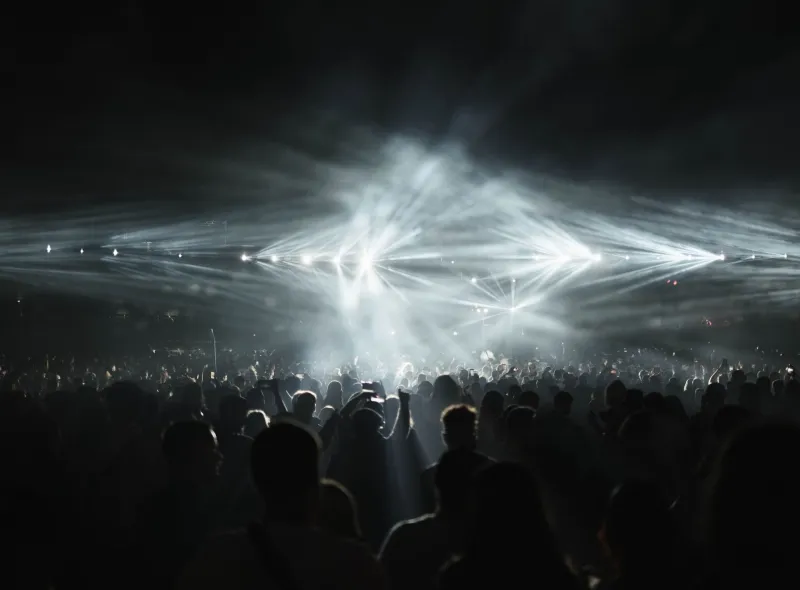
There's a moment — you know the one — where the music pulls everything back, strips the sound down to almost nothing, and lets a single grinding synth line hang in the air like a threat. Your chest tightens. The crowd around you goes quiet in that weird collective way. And then it hits.
That moment, that specific architecture of tension and release, has become so embedded in modern bass music that most listeners can't imagine a festival set without it. But it wasn't always like this. Somewhere along the way, Knife Party drew a line in the sand and said: this is what a drop should feel like. And the entire electronic music ecosystem agreed.
Before the Blade Dropped
To understand how seismic Knife Party's impact actually was, you have to rewind to the early 2010s. Dubstep was exploding in the US, but the structural language of the genre was still being figured out in real time. Plenty of tracks had drops, sure — but many of them were blunt instruments. Big sound comes in, crowd goes nuts, repeat. The craft of building toward a moment, of making the audience feel like they were being surgically prepared for impact, was far less common.
Rob Swire and Gareth McGrillen arrived at the party with a very different philosophy. Coming out of their Pendulum years, both had deep roots in rock and drum-and-bass, genres where dynamics aren't just a nice touch — they're the whole point. When they started building tracks under the Knife Party name, that structural DNA came with them.
The result was something that felt fundamentally different from what else was charting at the time. Tracks like "Internet Friends" and "Bonfire" weren't just loud — they were designed. Every element in the buildup served a purpose. Every strip-back was calculated. The drop, when it finally arrived, felt earned in a way that a lot of contemporaries simply couldn't match.
The Anatomy of a Knife Party Drop
Ask a producer what makes a Knife Party drop work, and you'll get a few consistent answers. First: restraint. The duo has always understood that what you don't play is just as important as what you do. Their buildups don't throw everything at the wall — they layer strategically, pulling the listener forward with just enough information to keep them hooked without tipping the hand too early.
Second: the filter sweep and frequency manipulation game. Knife Party became known for using low-cut filters during their buildups to physically remove bass from the mix, creating a kind of sonic vacuum. Your ears — and your body — start craving the low end that's been taken away. When it snaps back in at the drop, the physiological response is almost Pavlovian. It's not an accident. It's engineering.
Third: the motif callback. Many of their most iconic moments involve a melodic or rhythmic idea introduced early in a track that gets deconstructed, stretched, and then returned to in a completely different form at the drop. It rewards listeners who are paying attention and creates a sense of narrative that most pure party tracks skip entirely.
"They basically taught a generation of producers that a drop is a story beat, not just a sound effect," says one Los Angeles-based producer who asked to remain anonymous but whose work has appeared on major US festival lineups. "Before I really studied what they were doing, I thought a drop was just about volume and aggression. Knife Party showed me it was about context."
The Festival Crowd Feedback Loop
Here's where it gets interesting from a cultural standpoint. Once Knife Party started playing major US festivals — Electric Daisy Carnival, Ultra, Coachella — their approach to drops didn't just influence other producers. It started reshaping what audiences expected.
Festival crowds are a feedback mechanism. They respond to what they've been trained to respond to, and when they experience something that hits harder and more satisfyingly than anything else they've heard that weekend, they carry that standard with them to every future set they attend. Knife Party built a generation of listeners who now wait for that specific kind of payoff — the slow burn, the vacuum, the snap — and who feel genuinely cheated when a drop arrives without it.
This isn't hyperbole. Talk to anyone who's worked in festival production or crowd management at a major US electronic event in the last decade, and they'll tell you that crowd energy peaks have become more predictable, more clustered around specific structural moments in tracks. The audience has been conditioned. They know when a drop is coming, and they know what it's supposed to feel like when it lands.
That conditioning has a name among a lot of producers in the scene, even if it's informal: the Knife Party Effect.
How Bedroom Producers Absorbed the Blueprint
The influence didn't stay on the main stage. YouTube tutorials, Reddit production threads, and DAW forums across the US are full of conversations that trace back, directly or indirectly, to the structural choices Knife Party popularized. Phrases like "tension architecture" and "frequency anticipation" show up in production circles now as if they've always been there. In many ways, Knife Party normalized a level of intentionality that a lot of hobbyist producers had never considered.
Ableton and FL Studio preset packs built around Knife Party-style sounds became some of the most downloaded resources in the mid-2010s. Sample libraries started including "buildup tension" and "drop impact" as specific categories. The language of production shifted, and the duo's fingerprints are all over that shift.
For a lot of young American producers, deconstructing a Knife Party track became a rite of passage — the same way a jazz musician might transcribe a Miles Davis solo or a rock guitarist might learn a Hendrix riff note for note. You didn't do it to copy them. You did it to understand the mechanics, and then you took those mechanics somewhere new.
The Standard They Set and Where It Goes Next
It would be easy to frame this as a story about dominance — Knife Party came in, took over, and everyone else followed. But the more accurate picture is more collaborative than that. What they really did was raise the floor. They established a baseline expectation for structural sophistication in bass music that made the entire genre smarter and more demanding.
Producers who came up after them had to reckon with an audience that had been educated. You couldn't get away with lazy buildups anymore. You had to think about the why behind every element, every silence, every moment of release. That pressure, applied broadly across a generation of producers, pushed the craft forward in ways that are still playing out today.
Knife Party didn't invent the drop. But they made it mean something. And if you've ever stood in a crowd at a festival, felt that bass disappear, held your breath for three seconds, and then lost your mind when it came back — you've felt exactly what they built.
That feeling? That's the whole point. And it's not going anywhere.