Still Shaking Basements: The Underground Bass Scene That Knife Party's Early DNA Built
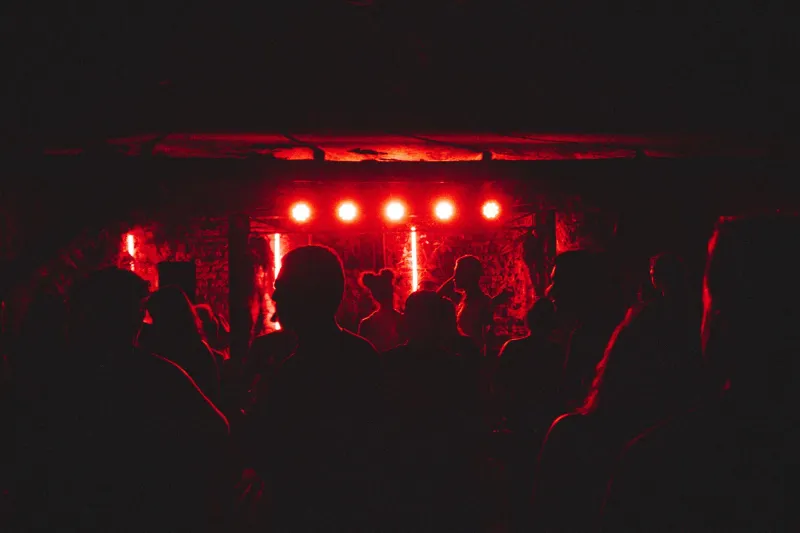
Every sound that makes it to a festival mainstage started somewhere darker and louder and smaller. It started in a warehouse with bad ventilation and better speakers than the building deserved. It started in a basement in Denver or a converted garage in Atlanta or a 200-capacity venue in Brooklyn where the ceiling was low enough that you could feel the bass in your teeth before the drop even hit.
Knife Party's early catalog — those first EPs that landed like a grenade in the dubstep ecosystem circa 2011 and 2012 — didn't just influence the mainstage. They sent shockwaves straight down into the underground, and those tremors are still being felt in ways that don't always get the attention they deserve. This is about that story. The one that happens in the rooms without corporate sponsorships.
What Made the Early Stuff So Different
To understand why Knife Party's influence on underground culture runs so deep, you have to go back to what made those early tracks genuinely strange. "Internet Friends" wasn't just a heavy dubstep record — it was a piece of sonic theater, complete with a narrative arc and a tonal shift that felt more like a short film than a dance track. "Bonfire" weaponized simplicity in a way that felt almost confrontational. These weren't tracks engineered to please. They were tracks engineered to disturb, in the most productive sense of that word.
At a moment when mainstream dubstep was starting to calcify around predictable formulas — the same filtered build, the same half-time drop, the same crowd-tested wobble — Knife Party's early material injected genuine unpredictability back into the genre. Producers in basements and bedrooms across the US took notice, and many of them started asking a question that still drives underground bass music today: what happens if we stop worrying about what's expected?
"Those EPs gave a lot of us permission," says Denver-based producer and DJ collective founder Jace Morello, who runs a monthly underground bass night called Static Pressure out of a venue that holds maybe 300 people on a good night. "It wasn't about copying the sound. It was about copying the attitude. The idea that you could be aggressive and weird and still be technically brilliant."
The Regional Scenes Carrying the Torch
The American underground bass ecosystem in 2024 is fragmented in the best possible way. There's no single geographic center, no dominant aesthetic, no unified rulebook. What there is, across cities like Denver, Portland, Seattle, Austin, and Detroit, is a loose network of producers, promoters, and venue operators who share a common commitment to experimentation over commercialism.
In Denver — arguably the US city with the deepest connection to bass music culture — the scene has developed a distinctly industrial edge in recent years. Producers working under monikers like Gravemind Circuit and Hollow Frequency are pushing dubstep structures into genuinely uncomfortable sonic territory, layering field recordings and distorted synthesis over rhythm patterns that owe a clear debt to the dissonant energy of Knife Party's Haunted House EP.
Portland's underground operates differently — more textural, more influenced by ambient and experimental electronic traditions — but the same rejection of commercial formula is present. Local collectives like Subfrequency PDX have been hosting events in non-traditional spaces, deliberately avoiding the club infrastructure in favor of art galleries, industrial lofts, and outdoor installations where the listening experience can be controlled on their own terms.
"The venues matter as much as the music," says Subfrequency co-founder and producer Nia Caldwell. "When you put bass music in a room that wasn't designed for it, something different happens. The frequencies interact with the architecture. It gets weird in ways you can't plan. That's the whole point."
Production Trends Rooted in That Original Aggression
Beyond the regional scenes, there are clear production trends in contemporary underground bass music that trace a direct line back to Knife Party's foundational aesthetic choices. Understanding those trends requires a little bit of technical archaeology.
The first is the return of deliberate sonic ugliness. In the mid-2010s, as EDM production moved toward increasingly polished, radio-ready sounds, the underground quietly preserved and developed a tradition of intentional harshness — distortion applied not as an accident but as a compositional tool, sub-bass pushed into registers that flirt with speaker damage, transients left uncompressed to retain their raw physical impact. This is Knife Party's influence operating at the cellular level of production philosophy.
The second trend is structural unpredictability. Contemporary underground producers are increasingly resistant to the eight-bar phrase structures and four-on-the-floor predictability that dominate commercial dance music. Tracks that shift meter mid-build, that drop into silence where the kick should be, that subvert the expected release — these are everywhere in the current underground, and they reflect an aesthetic lineage that runs through Knife Party's more experimental moments.
"Rob Swire has talked about treating tracks like puzzles," notes Seattle producer and music theory enthusiast Dev Harrington, who releases under the alias Threshold Protocol. "That idea — that a track should have an internal logic that rewards attention — is something a lot of us absorbed without even realizing it. You hear it in how people approach arrangement now. It's not just about the drop. It's about the whole architecture."
The Grassroots Ecosystem: Collectives, Labels, and Communities
The infrastructure supporting this underground scene is as interesting as the music itself. Independent labels like Subsidia Records and Rottun Recordings have created spaces where experimental bass music can exist commercially without being domesticated by commercial pressures. Discord servers and Twitch streams have replaced the old-school forum infrastructure, creating real-time communities where producers share work-in-progress tracks and get feedback from listeners who care about the craft.
There's also a generational handoff happening in real time. Producers who were teenagers when Knife Party's early EPs dropped are now in their late twenties and early thirties, experienced enough to have developed genuine technical fluency and young enough to still be hungry. They're the ones running the small labels, booking the underground shows, mentoring the next wave.
"We grew up on that stuff," says Morello. "And now we're in a position to build something with it. That feels like a responsibility."
The Blade Keeps Moving
Mainstage success is visible and loud and easy to track. Underground influence is slower and quieter and harder to quantify, but it's often more durable. The producers working in basements and small venues across America right now aren't chasing the festival circuit — they're chasing something more specific, a feeling and a standard that got established in those early Knife Party releases and never really left the bloodstream of the genre.
The bass still shakes the walls. The rooms are still small. The music is still weird in all the right ways. The blade, as it turns out, doesn't need a mainstage to stay sharp.