Sound Architects: How Knife Party Rewired the DNA of Modern Bass Music
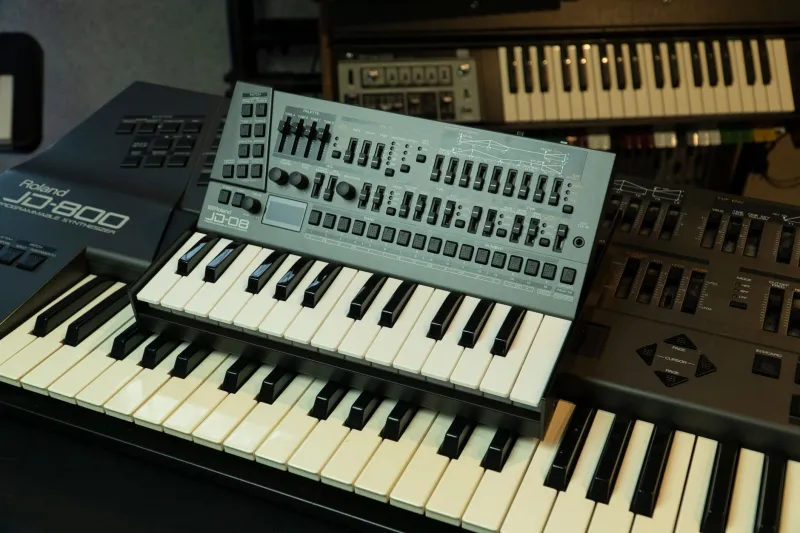
Every generation of electronic music has its technical architects — producers whose decisions about synthesis, arrangement, and sound design end up functioning less like personal style choices and more like shared infrastructure that the whole scene builds on top of. Knife Party is one of those architects.
This isn't a nostalgic claim. It's a structural one. When you trace the signal path from where bass music was in 2011 to where it is in 2024 and 2025, you keep running into the same fingerprints. Specific approaches to layering, particular philosophies about tension and release, a certain willingness to treat aggression as a compositional tool rather than just an aesthetic. Those fingerprints belong to Rob Swire and Gareth McGrillen.
The question worth asking now — with a new wave of producers actively reshaping what bass music sounds like — is exactly how that influence is flowing. Is it direct imitation? Conscious reaction? Something more complicated?
What Knife Party Actually Introduced to the Toolkit
Before mapping the influence, it helps to be specific about what Knife Party actually brought to the table, because "they were influential" is a statement that explains nothing.
The most technically significant contribution was probably their approach to what producers sometimes call "ear candy" — the dense layering of mid-range textural elements that fill the space around a central bass line. Before Knife Party made this approach mainstream, a lot of bass music was relatively sparse in the mids, letting the low end dominate and treating everything else as decoration. Knife Party's productions were busy in a way that felt intentional rather than cluttered, and that business created a kind of sensory intensity that audiences responded to immediately.
Second, and arguably more lasting, was their approach to tension architecture. The way a Knife Party drop is constructed — the specific ratio of buildup length to release impact, the use of silence and filtered noise as structural elements — became a kind of template that producers across multiple subgenres absorbed and adapted. You can hear it in riddim, in heavy dubstep, in certain strains of experimental club music that have nothing else in common with Knife Party's aesthetic.
Third was a philosophical stance that often gets overlooked: the deliberate refusal to stay in a lane. "Abandon Ship," their 2015 album, was a document of a group actively resisting categorization at a moment when genre loyalty was a significant commercial and social currency in electronic music. That willingness to move — to pull from industrial, from house, from punk, from orchestral production — gave producers permission to do the same.
The 2024-2025 Wave and the Knife Party Thread
Look at the producers generating serious buzz in the US bass music scene right now and the Knife Party lineage is visible everywhere, even when the producers themselves might not frame it that way.
The riddim subgenre, which has developed a genuinely passionate American fanbase centered around festival circuits and college towns, owes a structural debt to the mid-range aggression Knife Party helped normalize. The specific way riddim tracks use negative space — long, grinding sustained tones broken by sharp rhythmic punctuation — is a direct evolution of production choices that Knife Party was making a decade ago.
More interesting is what's happening in the experimental electronic space, where producers are taking the Knife Party approach to tension and applying it to much slower tempos and more abstract sonic palettes. The underlying architecture — the idea that a drop should feel like a physical event, that bass is as much a textural element as a harmonic one — is recognizable even when the surface aesthetics are completely different.
"I think a lot of younger producers absorbed Knife Party without necessarily knowing that's what they were absorbing," says one electronic music educator who works with emerging producers at a Chicago-based program. "It's in the YouTube tutorials they watched, it's in the tracks they studied when they were first learning. The influence is baked into the environment."
The Reaction Artists: Building Against the Blueprint
Not every current producer is building on the Knife Party foundation — some are consciously building against it, and that reactive relationship is equally important to understanding the influence.
There's a strain of American bass music right now that's explicitly interested in warmth, organic texture, and emotional vulnerability — qualities that are almost definitionally absent from Knife Party's most aggressive work. Producers in this space sometimes describe their aesthetic as a corrective to what they see as the emotional coldness of peak-era festival bass music. Knife Party, fair or not, often functions as the shorthand for that era.
But here's what's interesting: even these reaction artists are using Knife Party's structural logic. The tension and release architecture, the strategic deployment of silence, the understanding that a drop is a moment rather than just a section — these things persist even in productions that are sonically miles away from "Internet Friends" or "Boss Mode."
That's how you know an influence has genuinely gone structural rather than just stylistic. When even the people arguing against your aesthetic are using your grammar, you've become part of the language.
The Production Technique That Won't Die
One specific Knife Party technique deserves its own section because it keeps showing up in contemporary productions in ways that are almost uncanny: the use of vocal samples as rhythmic percussion rather than melodic or lyrical elements.
Knife Party was early and aggressive in treating chopped vocal fragments as pure texture — rhythm objects stripped of semantic content and repurposed as groove elements. In 2024 and 2025, this technique is everywhere, applied across tempos and genres that range from hyperpop to dark techno. The specific sound is different, but the conceptual move — voice as machine, humanity as rhythm — is the same.
Why This Matters for the Scene
Understanding Knife Party's influence isn't just an academic exercise. It has practical implications for producers trying to figure out where the scene is going and where the white space is.
The subgenres and sounds that are most saturated right now tend to be the ones where Knife Party's influence has been most directly absorbed — where the blueprint was copied rather than interrogated. The more interesting work, both commercially and artistically, is happening where producers have understood the logic behind what Knife Party did and are applying that logic to entirely different sonic raw materials.
In other words: the opportunity isn't in sounding like Knife Party. The opportunity is in thinking like Knife Party — in identifying the unexplored tension between aggression and melody, between structure and chaos, between genre loyalty and deliberate genre destruction.
The blade is still sharp. The question is what you're cutting with it.