Eyes Open, Mind Blown: The Visual World of a Knife Party Show and Why You Can't Look Away
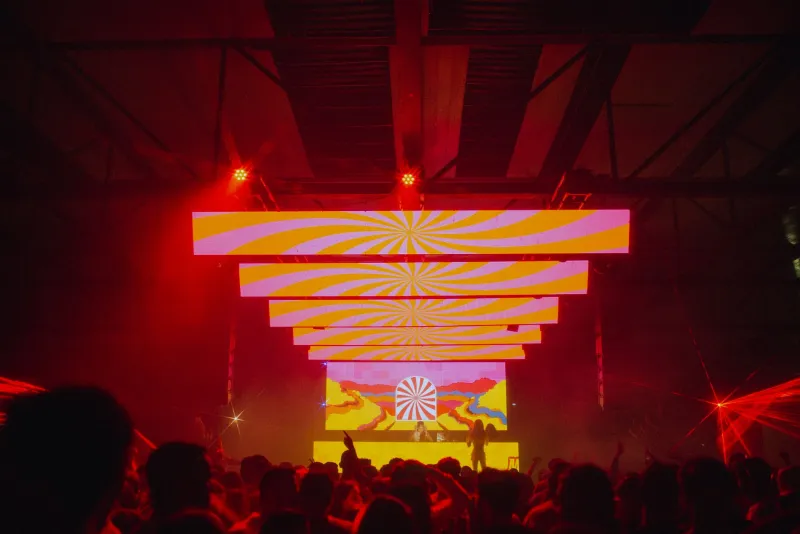
Let's be honest — you could argue that bass music is meant to be felt with your whole body, not just heard with your ears. But Knife Party takes that idea further than most. At a Knife Party show, the lights aren't decoration. The visuals aren't an afterthought. The entire production is engineered to hit you from every direction at once, and understanding how that works makes the experience something else entirely.
If you've caught the duo at a major US festival — EDC Las Vegas, Ultra Miami, or any of the big-room club nights they've taken over across the country — you already know what we're talking about. If you haven't, this is your field guide.
Why Visuals Matter More Than You Think
There's actual science behind why a great light show makes music hit differently, and it connects directly to how Knife Party constructs their live experience. When visual stimuli sync tightly with audio — when a strobe flash lands exactly on a snare hit, or when a color shift matches a tonal change in the track — the brain processes them as a unified event rather than two separate inputs. The result is an amplified emotional response. The drop feels bigger. The tension in the buildup feels more physical.
This is sometimes called the "McGurk effect" of live music production — a principle borrowed from audiovisual speech perception research that describes how what we see changes what we hear. Festival production teams who work at the highest level understand this intuitively, and Knife Party's visual approach suggests they've been thinking about it for a long time.
The duo's sets aren't just loud. They're calibrated. And the visuals are part of that calibration.
The Aesthetic Language of a Knife Party Set
Describing a Knife Party visual production to someone who hasn't seen one is like trying to explain a roller coaster — the words don't fully get there. But there are consistent elements that define their aesthetic language, and once you know what to look for, you'll notice them everywhere.
First: contrast. Knife Party sets tend to live in extremes. Moments of near-darkness punctuated by blinding flashes. Periods of relative visual calm that make the sensory explosion of the drop feel genuinely shocking. This isn't accidental — it mirrors the audio dynamics of their tracks, which are built around the same tension-and-release structure.
Second: industrial imagery. The Knife Party brand has always had a hard, mechanical edge to it, and that carries through into their visual production. Angular shapes, harsh lighting rigs, and a general aesthetic that feels more warehouse-rave than pop concert. Even at massive outdoor festivals, there's something intimate and slightly dangerous about the atmosphere they create.
Third: color as a signal. If you pay attention across a full set, you'll start to notice that color shifts aren't random. Cooler tones tend to anchor the more atmospheric, tension-building passages. Warmer, more aggressive colors — reds, oranges, harsh whites — tend to arrive with the heavy moments. It functions almost like a visual bassline running parallel to the audio.
The Festival Stage as a Total Environment
Knife Party has performed at venues that range from intimate club rooms to 80,000-capacity festival grounds, and one of the more impressive things about their visual approach is how it scales. The core principles stay consistent whether they're working with a relatively modest LED rig or a full festival stage with multiple towers, delay screens, and pyrotechnics in the mix.
At larger US events — think the main stage at EDC or the Kinetic Field setup — the additional production resources let them extend that aesthetic into the physical space around the crowd. When you're standing 200 feet back from the stage and the lighting rigs are tall enough to be visible from across a field, the visual experience becomes environmental. You're not watching a show. You're standing inside one.
For fans planning to catch a Knife Party set at a festival this year, stage position matters more than people realize. Being too close means you lose the full picture of the visual production — you're essentially looking up into individual fixtures rather than seeing the composition as a whole. The sweet spot for most major festival setups is roughly 50 to 150 feet back from the front barrier, slightly off-center. You get the audio impact, the physical bass response, and the full visual field without losing any of it.
What Sets Them Apart From Their Peers
A lot of electronic acts in Knife Party's weight class have impressive production. Big LED walls, competent lighting design, the standard festival toolkit. What separates Knife Party's visual approach isn't access to better gear — it's intentionality. The visuals feel like they were designed for these specific tracks, not applied to them after the fact.
That specificity shows up in the timing. Transitions in the visual programming tend to hit exactly where transitions happen in the music, often at a level of precision that suggests the two were developed in parallel rather than one being adapted to fit the other. Whether that reflects the duo's direct involvement in visual production decisions or an unusually close working relationship with their production team, the result is a coherence that's genuinely rare.
Compare that to sets where the visuals feel like a separate department doing their own thing alongside the music — where the light show is impressive but doesn't quite connect to what's happening sonically. Knife Party sets don't have that disconnect. Everything is pulling in the same direction.
How to Get the Most Out of the Experience
If you're heading to a Knife Party show and you want the full package, a few practical notes:
Arrive before the set starts. The opening minutes of a Knife Party performance often include some of the more deliberate visual storytelling — establishing the aesthetic mood before things get heavy. Showing up late means missing context that makes the rest of the set land differently.
Look up occasionally. It sounds obvious, but in a crowded festival environment it's easy to spend the whole set staring at the stage without taking in the full lighting rig above and around you. The production extends beyond the screens.
Let your eyes adjust. The contrast-based visual design means your visual system is constantly being reset. Don't fight it — that disorientation is part of the experience, and leaning into it makes the payoff moments hit harder.
Knife Party built their name on sound. But the full picture — the complete sensory experience of being in that crowd when the drop hits and every light in the rig fires at once — that's something you really do have to see to believe.