When Dubstep Crossed the Dinner Table: The Unlikely Cultural Reach of Knife Party
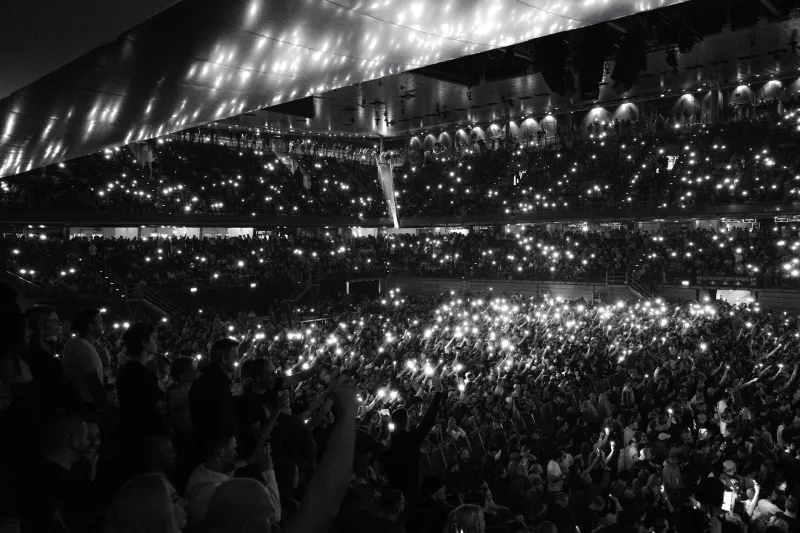
There's a specific kind of moment that every electronic music fan knows. Someone outside the scene — a parent, a coworker, a football coach — references a song you thought only you and your people knew about. It's disorienting. A little flattering. Maybe slightly annoying. And if you were a Knife Party fan in the early-to-mid 2010s, you probably experienced that moment more than once.
Rob Swire and Gareth McGrillen didn't set out to make crossover records. They set out to make the most technically aggressive, sonically uncompromising electronic music they could after wrapping up their chapter with Pendulum. What actually happened, though, was something stranger and more interesting: they accidentally built a bridge between the underground and everyone else.
The Track That Broke the Seal
If there's a single moment you can point to, it's "Internet Friends." Released in 2011, it arrived with a hook so blunt it was almost absurd — "You blocked me on Facebook and now you're going to die" — and a drop so visceral that it needed no translation. You didn't need to know the BPM, understand sidechain compression, or have an opinion on the Funky Drummer sample to feel that thing hit.
What made "Internet Friends" different from a lot of dubstep at the time was that the aggression came wrapped in a concept anyone could grab onto. Social media drama. Being blocked. Petty digital grievances. This was 2011 — everyone was figuring out Facebook etiquette in real time, and Knife Party essentially soundtracked the frustration of it. Morning radio hosts played it as a joke clip. Sports highlight reels borrowed it without fully understanding why it worked. It didn't matter. It worked.
That's the thing about a genuinely great piece of music: it doesn't require context to land.
Stadiums, Sidelines, and Sync Licensing
By the time "Bonfire" started appearing in NFL and NBA broadcast packages, something had shifted. Sync licensing in American sports is its own ecosystem — conservative, focus-grouped, deeply risk-averse. The people selecting walk-up music for playoff games and montage tracks for SportsCenter are not typically adventurous. They're looking for something that communicates energy without alienating a 45-year-old in suburban Ohio.
Knife Party kept getting selected anyway.
That's not an accident, and it's not just about the drops — though the drops help. Their productions carry a kind of structural clarity that makes them function almost like orchestral pieces. There's a setup, a tension phase, a release. Even someone who has never heard dubstep can follow the emotional arc of a Knife Party track without a roadmap. That's a compositional skill that most producers in the genre never bothered to develop, because they were making music for people who already spoke the language.
Swire and McGrillen, whether consciously or not, built music that worked on multiple levels simultaneously. The heads could appreciate the sound design. Everyone else could just feel it.
The Parent Conversation Phenomenon
Here's a data point that no chart captures but that every Knife Party fan from that era can verify anecdotally: their music generated actual cross-generational conversations. Not just "my dad tolerated it" — actual questions. "Who made this?" "What's this called?" "Why does it sound like that?"
Part of that is the Pendulum lineage. Pendulum had already built a fanbase that stretched across rock listeners, drum and bass heads, and mainstream pop consumers. When Swire and McGrillen went harder and stranger with Knife Party, they took a chunk of that audience with them — an audience that was already older and more genre-diverse than the typical dubstep crowd.
But there's something else going on. The melodies in Knife Party tracks are rarely throwaway. Even in the most chaotic moments of a record like "LRAD" or "EDM Trend Machine," there are hooks underneath the noise that stick. Parents who caught a Knife Party track on their kid's phone speaker weren't hearing random digital chaos — they were hearing something with structure, even if they couldn't name it.
The Integrity Question
Here's where it gets complicated: did any of this mainstream attention compromise what made Knife Party interesting in the first place?
The honest answer is no — and the reason why is worth examining. Knife Party never chased the crossover. They never softened a drop to make it more radio-friendly, never brought in a pop vocalist to smooth over the edges, never released a "clean version" of anything in a way that felt like a concession. The mainstream came to them, not the other way around.
That matters. There's a version of this story where a duo notices their music is getting picked up by ESPN and starts engineering tracks specifically for that context. Knife Party didn't do that. "Haunted House," "Begin Again," "Resistance" — none of those records sound like they were made with a sports broadcast in mind. They sound like two guys who were genuinely excited about what they were building and couldn't be bothered to second-guess it.
The commercial success and the cultural penetration were byproducts of actual conviction, not a strategy.
What the Crossover Actually Revealed
Looking back, the Knife Party effect reveals something useful about how music actually spreads versus how the industry assumes it spreads. The conventional wisdom is that crossover success requires compromise — you meet the mainstream in the middle, you sand down the rough edges, you make something that fits.
Knife Party's trajectory suggests the opposite. The tracks that broke through to non-dance audiences were often the most extreme, most committed versions of what they were trying to do. "Internet Friends" is not a gentle introduction to electronic music. "Bonfire" is not subtle. "LRAD" is named after a crowd-control weapon and sounds like one.
What these tracks shared wasn't accessibility in the traditional sense. They shared confidence. A complete lack of hedging. You can feel it in the production — nothing is apologizing for being loud or weird or structurally unconventional. And audiences outside the dance world, it turns out, respond to that kind of certainty the same way dance audiences do.
Your parents didn't ask about Knife Party because the music was easy. They asked because it sounded like it knew exactly what it was.
Still Cutting Through
The conversations Knife Party sparked in living rooms and sports bars a decade ago didn't just fade out. They planted seeds. A generation of listeners who first heard "Internet Friends" on a YouTube compilation or a sports highlight are now the ones building playlists, buying festival tickets, and introducing the next wave of fans to the catalog.
That's the long game of genuine artistic impact — it doesn't expire when the trend cycle moves on. The tracks hold up because they were built to, not because the algorithm decided so.
Drop the needle anywhere in the Knife Party discography and you'll still find something that cuts. That's not an accident. That's what happens when two producers care more about the music than the moment.