Setlist as Scripture: How Knife Party's Festival Picks Are Quietly Rewriting the American Booking Playbook
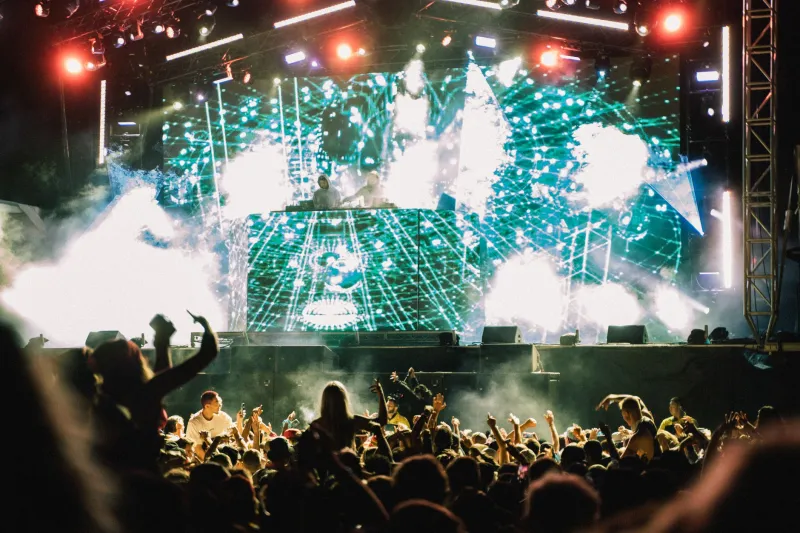
There's a version of festival culture where the headliner just shows up, plays the hits, collects the check, and leaves. Knife Party has never been that act. Rob Swire and Gareth McGrillen have consistently used their sets — at Coachella, Electric Daisy Carnival, Lollapalooza, Ultra, you name it — as something closer to a curated argument about what electronic music should sound like. And people in the industry have been taking notes.
This isn't just fan enthusiasm talking. The way Knife Party builds a setlist has quietly become one of the more influential forces shaping what gets programmed at American electronic music festivals. That's a bold claim, so let's actually dig into it.
More Than a Playlist — It's a Statement
Most headlining acts at major US festivals lean hard on familiarity. You play your catalog, maybe drop a new single, and you give the crowd what they came for. There's nothing wrong with that. But Knife Party has consistently embedded lesser-known tracks — their own deep cuts, but also music that clearly signals who they're listening to — into sets that sit in front of tens of thousands of people.
When you're playing to a crowd that large and you choose to spotlight something unexpected, you're doing more than keeping the energy up. You're essentially vouching for that sound. You're telling the audience, the photographers, the bloggers, and yes, the promoters standing in the wings: this matters. The platform that comes with a festival headline slot is enormous, and Knife Party has never treated it like a formality.
The Promoter Effect Is Real
Talk to anyone who's worked in festival talent buying and they'll tell you the same thing: headliners shape perception. When a trusted act with proven draw consistently incorporates a certain style, aesthetic, or even a specific sub-genre into their performance, it does something to the risk calculus around booking similar acts.
Festival promoters are not immune to taste. They're also not immune to data. When a Knife Party set goes viral because of a particular track choice — when Twitter lights up, when the TikTok clips start circulating — that registers. It tells a buyer that there's an audience hungry for that sound. It reduces the perceived risk of putting a less established act on a stage.
This is the Knife Party effect in its most practical form. They're not sitting in meetings telling promoters who to book. They're doing something more powerful: demonstrating demand in real time, in front of massive crowds, at the exact festivals where those booking decisions get made.
Deep Cuts as Discovery Engines
One of the more underrated things about a Knife Party set is how it functions as a discovery engine for the people in the crowd who don't spend their days deep in electronic music forums. Not everyone at EDC Las Vegas is a scene insider. A huge portion of that audience is there for the experience, and they're genuinely open to being introduced to something new.
When Knife Party drops something unexpected and the crowd responds — and they usually do, because Rob and Gareth have an almost unsettling sense of what will land — that's a conversion moment. Casual listeners become curious listeners. Curious listeners become fans of sounds they didn't know they wanted. And when those fans start looking up what they just heard, they're building an audience for artists who might not have had one at that scale before.
This is tastemaking in its most organic form. No algorithm, no playlist placement deal — just a well-chosen track in a high-stakes moment.
The Legitimacy Factor
There's another dimension here that doesn't get talked about enough: legitimacy. In a festival ecosystem where certain sounds get pigeonholed as "too niche" or "not commercial enough" for main stage treatment, having Knife Party incorporate those sounds into their sets carries real weight.
When an act with Knife Party's resume and draw treats a particular style seriously — when they put it in their set without irony, without framing it as some kind of novelty — it signals to the industry that the sound deserves respect. That's not a small thing. Entire sub-genres have struggled to break through to larger festival audiences because no one with sufficient platform was willing to vouch for them at scale.
Knife Party has, intentionally or not, served as that vouching mechanism for more than a few corners of bass music. And the booking decisions that followed at festivals across the US reflect that.
What This Means for Emerging Artists
If you're a producer grinding it out in the underground bass scene right now, the Knife Party model is worth studying — not just sonically, but strategically. The duo has demonstrated that a headline slot isn't just a reward for past success; it's an opportunity to reshape the landscape for whoever comes next.
Artists who've found themselves getting booked at mid-tier festival stages after years in the underground often point to moments where a trusted name in the scene gave their sound public credibility. The mechanism isn't always traceable in a straight line, but the pattern is consistent. Exposure begets legitimacy, legitimacy begets bookings, and bookings beget audiences.
Knife Party sitting at the top of that chain — and using that position thoughtfully — has created real opportunities downstream.
The Bigger Picture
American festival culture has spent the better part of a decade arguing with itself about what electronic music is supposed to look like at scale. There have been boom years and contraction years, genre cycles and backlashes, and an ongoing tension between accessibility and authenticity.
In the middle of all that, Knife Party has been quietly consistent. They show up, they play with intention, and they treat the setlist as a genuine creative statement rather than a commercial obligation. The result is a body of live work that has functionally served as a curriculum for what serious electronic music programming can look like.
Promoters who've watched enough Knife Party sets have absorbed something, even if they can't always articulate it. The acts getting booked, the sounds getting programmed, the stages being built — some of that traces back, at least in part, to two guys from Australia who decided their setlist was worth caring about.
Drop the bass. Feel the blade. And maybe, just maybe, help reshape an entire industry while you're at it.