Raised Expectations: How Knife Party Permanently Changed What We Demand From Live Electronic Music
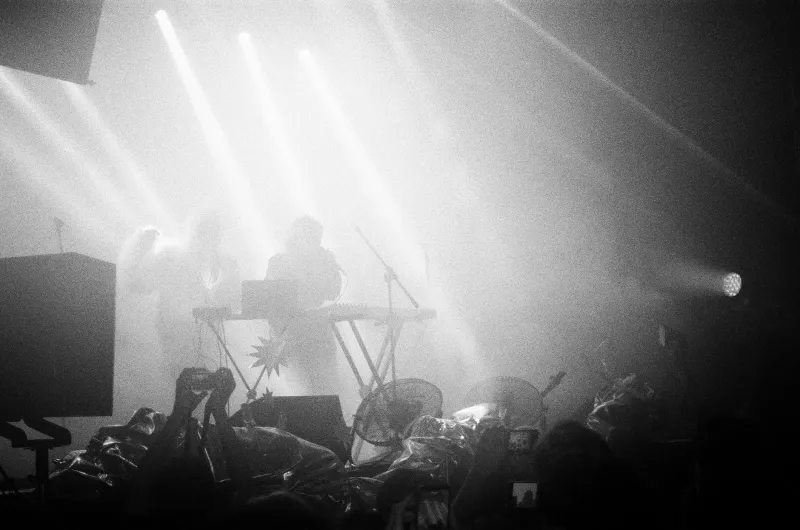
There's a moment at every great Knife Party set — you know the one. The room goes quiet for just a half-second, and then everything drops. Not sloppy, not muddy, not buried under a wall of reverb you can't decode. Clean. Surgical. Like somebody just pressed a blade through the noise and let the bass fall out perfectly intact.
That's not an accident. And if you've been to enough electronic music events over the past decade, you've probably started noticing that you're holding every other act to that same standard — whether you realize it or not.
The Production Standard That Started It All
Rob Swire and Gareth McGrillen built their reputation on technical precision long before Knife Party was even a name. Coming out of Pendulum, they already understood that electronic music live performance wasn't just about pressing play — it was about engineering an experience where every frequency had a job to do.
When Knife Party launched in 2011, that obsessive attention to sonic architecture came with them. Tracks like "Internet Friends" and "Centipede" weren't just catchy — they were almost uncomfortably clean. Every element sat in its own space in the mix. The lows didn't bleed into the mids, the highs didn't wash out the transients, and when those drops landed, you felt them in your sternum before your brain even processed what happened.
For fans, that became the new normal. And once you've heard what a drop is supposed to sound like, it's really hard to unhear it.
What Sound Engineers Started Noticing
Venue operators and festival audio crews across the US started picking up on something interesting as Knife Party's profile grew through the early 2010s: the crowd's tolerance for mediocre sound had dropped significantly. And the acts drawing those crowds? They were increasingly the ones who'd been influenced by — or were directly competing with — the sonic standard Knife Party had established.
Speaking with audio engineers who've worked major festival stages from EDC Las Vegas to Lollapalooza, a common theme emerges. The expectation around bass clarity and mix separation has shifted dramatically over the past decade. Audiences now react to muddy low-end the way they used to react to feedback — with immediate, visible frustration.
One veteran festival engineer put it plainly: acts that came up during the height of Knife Party's dominance learned fast that a smeared, indistinct drop wasn't going to fly anymore. Fans had been trained by the best.
That training wasn't accidental. Knife Party's meticulous approach to mastering, their insistence on sound checking with real attention to how their tracks translate on large-format systems, and their refusal to let live performance be a lesser version of the studio product — all of that filtered outward into industry expectations.
The Trickle-Down Effect on Club Culture
It's not just the festival circuit where this influence shows up. Club promoters in cities like Los Angeles, Chicago, and New York have increasingly reported that booking electronic acts now comes with an implicit technical rider review that didn't used to be standard practice. Promoters want to know how an act's material is going to behave on their specific system before they commit.
That shift in due diligence traces back, at least in part, to an era when Knife Party was packing clubs and demonstrating that electronic music performed live could be as technically demanding — and rewarding — as any acoustic performance.
Fans who followed the duo through their mid-decade club runs came away with vocabulary they didn't have before. They started talking about soundstage, about sub-bass rolloff, about whether a mix was "cutting" or "pushing." That language spread through online communities, through Reddit threads and Discord servers, and it changed what people felt entitled to demand from the shows they paid to attend.
When the Bar Moves, Everyone Scrambles
One of the more fascinating downstream effects of the Knife Party standard is what it did to acts who were coming up behind them. Producers who wanted festival slots had to reckon with an audience that had been educated by a duo who treated sound design like a discipline rather than a decoration.
This pushed a generation of American EDM producers to invest more seriously in mixing education, in proper monitoring setups, and in understanding how their tracks would translate off studio speakers and onto a 20,000-watt festival rig. The "good enough" threshold moved — and it moved because the audience moved it.
That's a legacy that doesn't always get discussed in the same breath as chart positions or streaming numbers, but it might be the most durable thing Knife Party has contributed to the scene. They didn't just make bangers. They made listeners smarter.
The Live Show as a Technical Statement
Watch footage of a Knife Party live set with fresh eyes and you start to notice things that casual fans might miss. The way transitions preserve low-end energy without creating frequency buildup. The restraint in how effects are applied — nothing is there just for show, every filter sweep and sidechain pulse is doing structural work.
This is what separates a Knife Party performance from someone simply triggering a playlist at high volume. The set is engineered in real time, responsive to the room, calibrated to the system. That's a craft, and it's one that has quietly become the expectation rather than the exception in the upper tier of electronic live performance.
Venue operators who've hosted the duo consistently describe the post-show conversations with their audio teams as educational experiences. The way Knife Party approaches gain staging, the way they handle the relationship between their stems and the house system — it's a masterclass that the venue's own engineers carry forward into future bookings.
What Fans Are Actually Asking For Now
Scroll through any fan community built around serious electronic music and you'll find a level of technical literacy that simply didn't exist fifteen years ago. People are discussing loudness normalization, talking about the difference between a well-tuned subwoofer array and one that's just loud, debating whether a specific act's live stems match their recorded output.
That conversation didn't materialize out of nowhere. It grew from a period when acts like Knife Party demonstrated, night after night on stages across the US, that the technical side of live electronic performance wasn't a backstage concern — it was the whole point.
The duo raised the bar not by telling anyone to do so, but by showing up and doing it themselves, consistently, at a level that made everything else feel like it was leaving something on the table.
And now? Now we all feel it when something falls short. That's the Knife Party effect. Once you've felt the blade, you notice when it's dull.