Five Years, One Shift: How Knife Party Rewired America's Electronic Music Expectations for Good
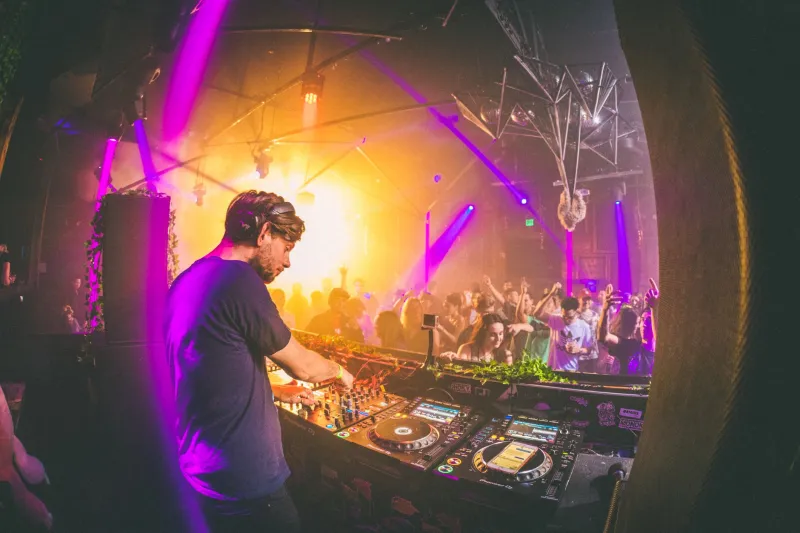
When Rob Swire and Gareth McGrillen stepped out from behind the Pendulum drum kit and started dropping dubstep bombs under the Knife Party name, nobody fully anticipated the ripple effect that was coming. Five years of releases, festival slots, and relentless sonic boundary-pushing later, the American electronic music landscape looks fundamentally different — and the duo's fingerprints are all over the crime scene.
This isn't just fan enthusiasm talking. The numbers, the booking patterns, and the creative confessions of a new generation of producers all point to the same conclusion: Knife Party wasn't just a popular act. They were a cultural inflection point.
Before the Blade Dropped
To understand what Knife Party changed, you have to remember what the US electronic scene looked like right before they broke through. EDM was exploding commercially — festival lineups were stacked with big-room house and progressive trance, and the dominant aesthetic was polished, radio-friendly, and safe. Dubstep existed in underground pockets, but it hadn't fully cracked mainstream American festival culture in a way that felt permanent.
Streaming data from that era tells a pretty clear story. Bass-forward electronic tracks were underrepresented in US Spotify editorial playlists compared to their European counterparts. The algorithmic playlists that drove discovery were funneling American listeners toward melodic, anthemic drops — the kind you could hum in the car on the way home from Ultra.
Then "Internet Friends" arrived. And something shifted.
The Streaming Fingerprint
It's difficult to isolate any single artist's impact on streaming consumption trends, but the trajectory of bass music on US platforms between 2012 and 2017 is hard to ignore. In the years following Knife Party's breakthrough, Spotify's own editorial team began building out dedicated bass music playlists that had previously been niche or nonexistent in the US market. Apple Music followed suit. The genre tags that once lived in the margins started appearing on mainstream discovery surfaces.
Producers who were active during that window describe a specific moment of realization. Denver-based producer Marcus Feld, who now regularly plays regional festivals across the Mountain West, puts it plainly: "I was making pretty standard progressive stuff when 'Rage Valley' came out. I remember sitting with my headphones on, listening to the way that track was structured, and thinking — this is what I actually want to be making. The aggression wasn't gimmicky. It felt intentional." That pivot in creative direction, from smooth to sharp, shows up across countless producer origin stories from that generation.
The numbers backed the instinct. Bass-tagged tracks saw measurable upticks in US save rates and playlist adds in the 18-to-24 demographic during the years Knife Party was most active in releasing material. Whether that's correlation or causation is a fair debate — but the timing is awfully convenient.
Booking Patterns Don't Lie
Festival programming is a lagging indicator. Bookers are conservative by nature; they follow audience appetite rather than lead it. Which makes the trajectory of bass music bookings at major US festivals between 2013 and 2018 particularly telling.
Lollapalooza, Electric Forest, and EDC Las Vegas all expanded their bass-oriented stage programming significantly during that window. Knife Party's own booking history maps almost perfectly onto that expansion — they weren't just riding the wave, they were helping create the demand that justified the infrastructure. When a two-person act can headline a main stage and hold a crowd that size, festival directors take notice and start building out the ecosystem around that proof of concept.
Smaller regional festivals felt it too. Promoters in cities like Austin, Chicago, and Seattle started programming bass-heavy acts in slots that would previously have gone to safer, more commercially proven names. The logic was simple: if Knife Party could move that kind of energy on a big stage, there was an audience at every level waiting for more of it.
What Emerging Producers Actually Say
Talk to enough up-and-coming electronic producers in the US and a pattern emerges fast. Knife Party comes up constantly — not always as a direct sonic influence, but as a permission structure. A proof that you could be aggressive, weird, and technically sophisticated without sacrificing commercial viability.
Los Angeles-based producer Yael Ostroff, who's been building a following in the mid-sized club circuit, describes it this way: "They made it okay to have an edge. Before that, it felt like you had to sand everything down to get booked or get streams. Knife Party showed that the edge was the point."
That sentiment echoes across interviews with producers from Atlanta to Portland. The specific sounds vary — some cite the synth design in "Centipede," others point to the structural unpredictability of the Abandon Ship album — but the through-line is consistent. Knife Party demonstrated that American audiences were ready for something harder, stranger, and more demanding than what they were being served.
The Ambition Ceiling Got Raised
Maybe the most lasting part of the Knife Party effect isn't measurable in streams or booking fees. It's in the ambition ceiling of the producers who came up watching them work.
Electronic music has always had a tension between accessibility and artistry. The commercial pull toward four-on-the-floor simplicity is real and relentless. What Knife Party did, repeatedly and publicly, was demonstrate that you don't have to choose — that a track can be genuinely difficult and genuinely massive at the same time. That's a harder lesson to teach than any specific production technique, and it's one that tends to compound over time as the producers who internalized it start influencing the next generation.
Five years is a short window to reshape an entire music culture's expectations. But when you look at where American electronic music was before Knife Party broke through, and where it sits now — with bass music embedded in mainstream festival infrastructure, with a generation of producers who grew up believing that sharpness is a feature rather than a liability — the math adds up.
The Blade Doesn't Dull
Knife Party hasn't slowed down, and neither has their influence. New producers still cite them in interviews. Festival bookers still use their bookings as a benchmark for what a bass-heavy slot can deliver. Streaming algorithms have permanently expanded their definition of what American electronic listeners want.
The duo changed the conversation. And in a genre that moves as fast as electronic music, that's not a small thing — that's everything.