Ripple Effect: The Knife Party Productions That Rewired How a Generation of Producers Thinks About Sound
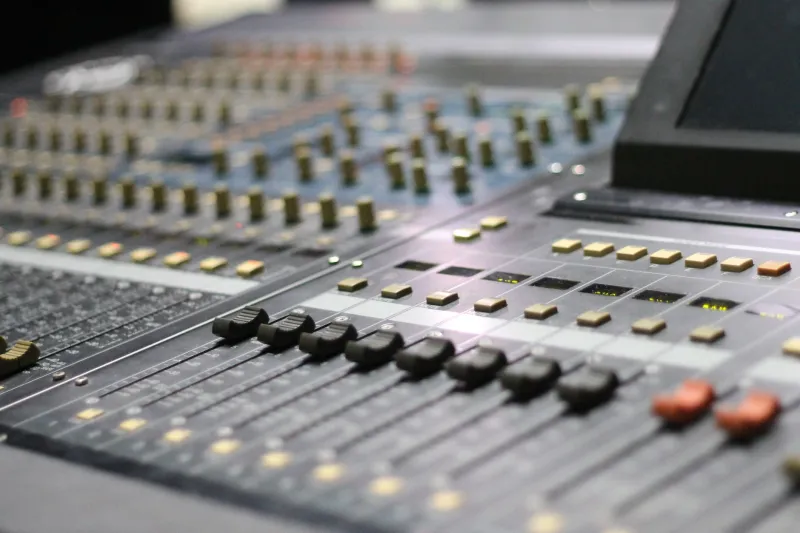
There's a specific kind of influence that doesn't announce itself. It doesn't show up in press releases or liner notes. It shows up in the way a producer reaches for a patch, the moment they decide to let a synth breathe instead of cutting it off, or the split second they choose brutality over polish. That's the Knife Party effect — and it's been reshaping electronic music from the inside out for over a decade.
Rob Swire and Gareth McGrillen didn't arrive quietly. Coming off the back of Pendulum, they entered the bass music world with a level of technical precision that felt almost unfair. But what made their productions genuinely transformative wasn't just the quality — it was the attitude baked into every layer. Aggressive where others were cautious. Surgical where others were sloppy. That combination hit producers like a two-by-four, and the reverberations are still being felt today.
The Track That Started the Conversation
If you want to trace the Knife Party effect back to a single ignition point, most producers who were active around 2011 and 2012 will point you toward Internet Friends. That track wasn't just a banger — it was a structural argument. The way the tension built before the drop, the way the vocal sample was weaponized rather than decorated, the sheer confidence of leaving so much negative space right before everything collapsed — it gave producers a new vocabulary.
Independent producers from Chicago to LA started pulling apart that track like it was a homework assignment. What was the compression doing in the low mids? How was the sidechain reacting? Why did that particular synth design feel so claustrophobic in the best possible way? The questions led to experiments, and the experiments led to a wave of productions that carried Knife Party's fingerprints even when their creators would never admit it.
"I remember looping that drop for probably two hours straight," says one underground dubstep producer based out of Atlanta who asked to remain anonymous. "Not even to enjoy it — just to figure out what was happening mechanically. It changed the way I thought about restraint. They held back so much, and that's what made the release so devastating."
Subgenre Crossover: The Spread Was Wider Than You'd Expect
Here's what makes the Knife Party influence genuinely fascinating — it didn't stay in one lane. Yes, the dubstep and drum and bass communities absorbed it immediately, but the ripple effect moved into future bass, electro house, and even the fringes of industrial techno. Producers who weren't even making aggressive music started borrowing the precision of the sound design.
The midrange aggression that defines tracks like Centipede showed up, softened and recontextualized, in festival trap productions that were chasing that same gut-punch feeling with different tools. The layering philosophy — the idea that every element of a mix should have an intentional role, not just fill space — became a kind of unspoken production standard that filtered through tutorial culture, forum discussions, and producer Discord servers across the country.
Producers who came up watching Knife Party sets on YouTube or ripping apart their tracks in Serum and Massive started asking different questions. Not just "how do I make a big drop?" but "what is every single layer actually doing, and does it earn its place?"
The Sound Design Legacy
Let's get specific for a second, because the technical side of this is where the influence gets really interesting. Knife Party had a way of designing synths that felt physically uncomfortable — not in a bad way, but in the way that makes you feel something in your chest rather than just your ears. That's not an accident. It's a deliberate approach to frequency placement, distortion character, and modulation behavior that a lot of producers are still chasing.
The use of formant shifting to make synths feel almost vocal, the way distortion was applied as a tonal tool rather than just a volume maximizer, the decision to let low-end elements breathe with sidechain compression that felt like the track was actually inhaling — these were design choices that seeped into production culture without most people realizing where they came from.
Several producers in the US bass music scene have openly credited Knife Party as a foundational influence in interviews over the years. Artists working in the heavy bass and experimental club spaces frequently cite that era of Knife Party productions as the moment they understood that electronic music could be both technically immaculate and emotionally confrontational at the same time.
Why the Effect Still Matters in 2024
The interesting thing about influence is that it compounds. The producers who were shaped by Knife Party went on to shape the next wave, and so on. So when you're listening to a heavy bass track from a newer artist and something about the drop feels surgical, deliberate, almost cruel in its precision — there's a decent chance you're hearing a third or fourth-generation echo of something that started with Internet Friends or LRAD or EDM Death Machine.
Knife Party proved something that mattered: you could be technically elite and still be viscerally exciting. You didn't have to choose between craft and impact. That's a lesson that doesn't expire, and producers across every corner of the electronic music world are still learning it — whether they know where it came from or not.
The blade cut deep. The mark it left isn't going anywhere.