Reading the Room: A Track-by-Track Autopsy of How a Knife Party Set Actually Works
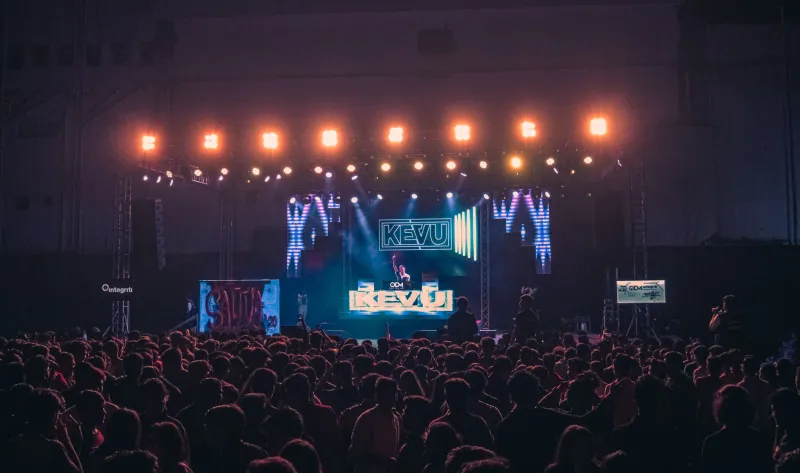
Most people who've been to a Knife Party show can tell you it was one of the best nights of their lives. Fewer can tell you exactly why. The energy felt different. The transitions hit harder. Something about the sequencing made the whole thing feel like one continuous experience rather than a collection of songs played in a row. That's not magic — it's architecture. And once you start seeing it, you can't unsee it.
We dug into fan recordings, setlist archives, and conversations with people who've caught multiple shows to map out the emotional blueprint of a Knife Party performance. Here's what we found.
The Opening Gambit: Controlled Aggression
Knife Party doesn't ease you in. That's the first thing to understand. Where some acts spend the opening twenty minutes warming up the crowd with mid-tempo transitions and crowd-friendly singalongs, Rob and Gareth tend to open with something that signals intent immediately.
The opening selection is almost never their biggest track. That's deliberate. Starting with "LRAD" or "Internet Friends" would blow the emotional budget in the first five minutes and leave nowhere to go. Instead, the opening track tends to be something with serious energy but slightly less cultural baggage — a track that the diehards recognize and lose their minds over, while newer fans register as a statement of purpose rather than a climax.
Fan accounts from multiple US festival runs confirm this pattern. "The first track always felt like a warning shot," said one attendee who caught three shows on the same tour. "Like they were telling you what the next ninety minutes was going to be."
The Escalation Architecture
The middle section of a Knife Party set is where the real craft shows up, and it's where most casual observers stop paying attention to structure and just start reacting to it.
What's actually happening during this stretch is a series of carefully managed energy peaks separated by brief release valves. A brutal drop is followed by a slightly more melodic transition, which resets the crowd's nervous system just enough before the next assault. It's the same principle that makes a great horror movie work — you can't sustain maximum tension indefinitely without it losing impact. You have to let people breathe so the next scare lands harder.
The genre shifts embedded in this section serve a similar function. Moving from hard dubstep to something with a drum and bass influence, or sliding into a more industrial texture, keeps the crowd slightly off-balance. You never quite know what's coming, which means you can never fully brace for it. That uncertainty is a feature, not a bug.
The Fan Testimony Problem (and What It Reveals)
We talked to a dozen Knife Party fans about specific setlist moments that hit differently live than they do on record, and the answers were remarkably consistent in one surprising way: almost nobody mentioned the drops.
What they remembered were the transitions. The moment a track they'd heard a hundred times suddenly connected to something unexpected and the entire crowd seemed to realize it at the same time. The brief second of silence before a build resolves. The way a particular bassline seemed louder in a specific venue because of how the room was shaped.
"There's this moment in the middle of the set where everything kind of slows down for like thirty seconds," said one fan who caught a show in Chicago. "And then it comes back twice as hard. I've tried to explain it to people who weren't there and it never lands. You had to be in the room."
That's the live dimension that no recording captures — the physical relationship between the music and the space, and the collective experience of a crowd moving through the same emotional arc together.
The Closing Sequence: Earned Release
The end of a Knife Party set follows a recognizable logic even when the specific tracks change. The closing sequence tends to front-load the biggest cultural touchstones — the tracks that have the broadest recognition — and sequence them in a way that builds toward a genuine release rather than just a loud finish.
"Internet Friends" and "LRAD" showing up late in the set isn't just crowd service. It's the payoff of everything that came before. By the time those tracks arrive, the crowd has been primed by ninety minutes of escalating tension and release cycles. The emotional response to hearing a familiar track in that context is fundamentally different from hearing it cold. The recognition hits, but it hits on top of everything the set has already built, which amplifies it significantly.
This is the part of the show that generates the most social media posts and the most "you had to be there" conversations afterward. It's not because the tracks are better live — it's because the set has done the work of making you ready to receive them.
The Invisible Hand
What makes Knife Party's setlist construction genuinely impressive is how invisible it is while it's happening. You don't feel like you're being guided through an experience. You feel like you're just reacting to great music. The architecture only becomes visible in retrospect, when you try to explain to someone who wasn't there why the night felt the way it did.
That invisibility is the point. The best structural decisions in live performance are the ones the audience never consciously notices — they just feel the result. Knife Party has been doing this long enough and consistently enough that it looks effortless, which is the highest compliment you can pay to something that clearly isn't.