Ghost Sets and Gravel Lots: The Knife Party Performances Nobody Was Supposed to See
There's a specific kind of bragging that happens in electronic music circles. It's quieter than regular bragging. It doesn't come with receipts, because half the time there weren't any cameras. It sounds like: "I was there when—" and then something that makes everyone else in the conversation briefly furious they weren't in the same city that night.
Knife Party has generated more than their share of those moments. Before the duo became a fixture on the main stages of every major US festival, before "Internet Friends" had a hundred million streams, they were doing what serious artists do: playing smaller rooms, showing up where they weren't always expected, and leaving audiences with stories that would survive long after the set itself was a fading memory.
We reached out to the fanbase — the ones who've been around long enough to remember what a Knife Party show felt like before it became an event — and asked them to share what they saw. What came back was a collection of stories that feel less like concert memories and more like folklore.
The Basement Show Nobody Announced
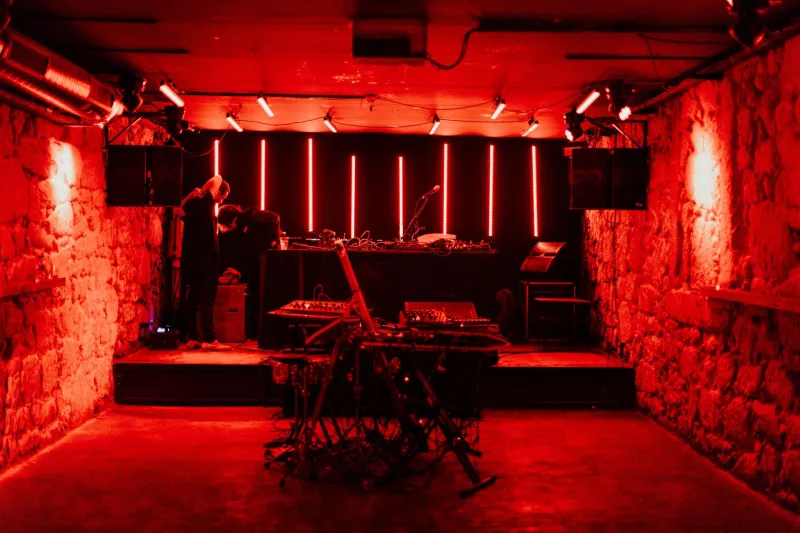
Sometime in the early 2010s, in a city that multiple people described as "definitely the Midwest, I think Ohio, maybe," a small warehouse party got a late addition to its lineup that nobody on the flyer had anticipated. The story goes that Rob and Gareth were in the area — the exact reason varies depending on who's telling it — and someone made a phone call, and by midnight they were behind a table in a room that was definitely not up to fire code.
The people who claim to have been there describe a set that was rawer than anything the duo was putting out publicly at the time. "It was like watching someone think out loud," one longtime fan told us. "They were testing stuff. Playing things that didn't have names yet. The crowd was small enough that you could actually see their faces."
Whether every detail of that story is accurate is almost beside the point. The fact that it's been told and retold, that it's become part of how the fanbase understands who Knife Party is, matters on its own terms.
The Festival After-Party That Wasn't on Any Schedule
Festival after-parties are their own universe. The official programming ends, the crowd migrates, and sometimes — if you know the right people or you're just in the right place — something happens that wasn't in any press release.
Multiple fans from different parts of the country have described versions of the same experience: stumbling into a smaller venue or a back room or an outdoor setup after a major festival day, expecting a local DJ, and finding Knife Party instead. No announcement. No merch table. Just the music.
"I was at a festival in the Pacific Northwest and the official day was over," one fan recalled. "Someone in our group heard something from someone else and we just followed the sound. Ended up in this tent situation, maybe two hundred people, and it was them. They played for two hours. No visuals, no production. Just speakers and a table and the hardest set I've ever heard in my life."
The common thread in these stories isn't just the surprise — it's the intimacy. In a career defined by massive stage production and festival-scale spectacle, these small-room moments represent something different. A reminder that at the core of it, this is two guys who genuinely love playing music for people who love hearing it.
The B2B Nobody Documented
One of the more persistent pieces of Knife Party mythology involves a surprise back-to-back set with another high-profile electronic act at a club show on the East Coast — a show that, by all accounts, was not recorded, not streamed, and not officially acknowledged by either party afterward.
The details are fuzzy in the way that details get fuzzy when you're in a dark room at 2 a.m. and the music is very loud. But the broad strokes appear consistently across multiple accounts: an unannounced guest, a set that blended both artists' catalogs in ways that felt genuinely spontaneous, and a crowd that collectively lost its mind.
"The energy was different from any set I've seen since," said one fan who claims to have been in the venue. "When you know you're watching something that isn't going to exist anywhere else — no recording, no recap — it changes how you listen. Everyone was just completely present."
There's something almost deliberately analog about that. In an era when live music is documented to within an inch of its life, a performance that exists only in the memories of the people who were there feels like a small act of resistance.
Why the Stories Matter
You might wonder why a site like this is spending time on performances that can't be verified, confirmed, or linked to. Fair question.
Here's the thing: the mythology around an artist is part of what that artist means to their community. The stories fans tell about Knife Party — the surprise sets, the unannounced appearances, the moments that felt like gifts to the people who happened to be in the right place — are part of how this fanbase understands its own history. They're evidence of a relationship between the duo and their audience that goes beyond ticket sales and streaming numbers.
Knife Party built their following in the era when electronic music was still figuring out what it was in America. The grassroots credibility they earned in those early years, in those smaller rooms, is part of why the main stage moments hit as hard as they do. You can't fake that. You have to show up and play.
And if the stories are a little bigger every time they're told — if the crowd gets smaller and the set gets longer and the moment gets more electric with each retelling — well, that's just how folklore works. The blade gets sharper in the telling.