Gold Standard: How Knife Party Drops Became the Benchmark Every Festival Booker Measures Against
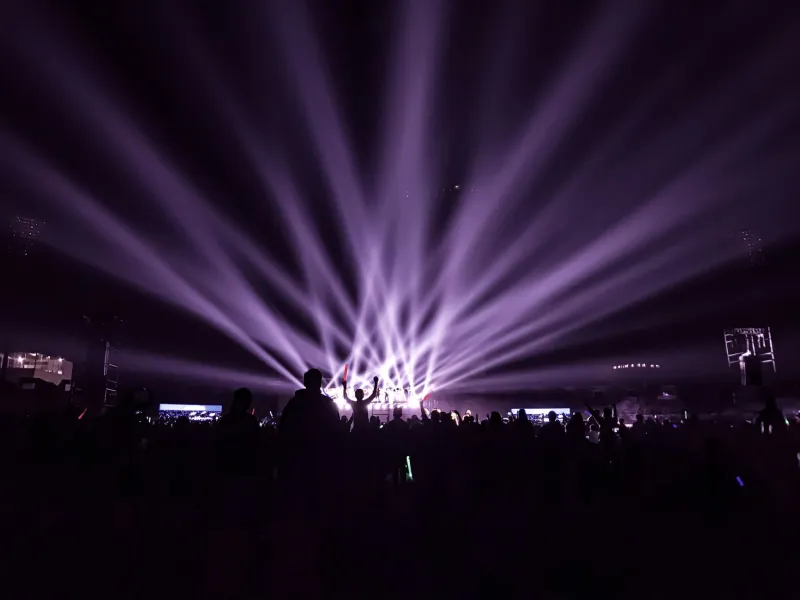
There's a phrase that gets thrown around in festival production circles, usually somewhere between the third cup of coffee and the final lineup spreadsheet review: the Knife Party problem. It's not actually a problem. It's more of a measuring stick — an invisible threshold that every other act on a bill gets held up against, whether the promoters admit it out loud or not.
Booking Knife Party isn't just a business decision. It's a statement.
The Moment Everything Shifted
Cast your mind back to the early 2010s, when EDM was exploding across the American festival landscape. Lollapalooza, Electric Daisy Carnival, Ultra Music Festival — these events were scrambling to figure out what the new generation of dance music fans actually wanted. Bigger stages, louder systems, more lights. But something was still missing: teeth.
Knife Party brought the teeth.
When Rob Swire and Gareth McGrillen — the Australian duo who had already built a devoted following through Pendulum — pivoted hard into aggressive electronic production, they weren't just making music. They were engineering experiences. Tracks like "Bonfire" and "Internet Friends" didn't just land in sets; they detonated. The bass textures were meaner, the build-and-release architecture was more theatrical, and the crowd response was unlike anything festival photographers had captured before.
Promoters noticed. Fast.
"Once you put Knife Party on a mainstage and watched what happened at the drop, you couldn't unsee it," said one Midwest festival programmer who has worked with several major US summer events. "It recalibrated what we expected from every other act we were considering. If someone couldn't at least gesture toward that kind of crowd detonation, we started asking harder questions."
The Ripple Effect on Programming
Festival curation is part gut instinct, part data, and part imitation. When something works — really works — it spreads. Knife Party's success on US stages in the early-to-mid 2010s created a cascading effect on how programmers thought about set sequencing, stage placement, and even sound system specifications.
Venues started upgrading subwoofer arrays specifically because bass-forward acts were driving ticket sales. Promoters began prioritizing artists who could demonstrate what industry insiders sometimes call "drop density" — the ability to deliver multiple peak-energy moments within a single set rather than building to one climax and coasting.
Opening acts felt the pressure most acutely. Playing before Knife Party became a masterclass in expectation management. "You're warming up a crowd that already knows what's coming," explained one Chicago-based DJ who has opened for major EDM acts at US festivals. "You can't try to be them. You have to be smart about building energy to a point where they can take over and go even harder. That's a specific skill, and Knife Party basically defined what 'going harder' looks like."
What Booking Knife Party Actually Signals
In the festival economy, every booking sends a message. Headlining slots are obvious — they signal the event's genre identity and audience demographic. But mid-tier and special guest placements are where the real curation philosophy lives, and Knife Party has occupied that territory in a way few acts can match.
When a festival books Knife Party, it's telling its audience: we're not playing it safe. The duo's reputation for uncompromising sound design and physically overwhelming live production carries a kind of brand credibility that translates directly into ticket confidence. Fans who have seen them before know exactly what they're signing up for. Fans who haven't are curious enough to show up early.
"There's a trust signal embedded in that booking," noted one event marketing consultant who works with US festival brands. "Knife Party has never phoned it in. Every set feels like they're trying to break something — in the best possible way. That consistency is incredibly valuable to promoters because it's essentially pre-sold enthusiasm."
The Acts That Came After
The influence on DJ culture runs even deeper than festival slots. Producers who came of age listening to Knife Party's early EPs carry those sonic fingerprints into their own work, and that trickles back into festival programming in a generational loop. The aggressive layering, the industrial-tinged synth work, the refusal to let a drop feel comfortable — these choices became templates.
You can hear it in the work of artists who now fill the same festival tiers Knife Party helped establish. The vocabulary of the modern EDM mainstage set — the tension-and-release architecture, the deliberate use of negative space before the drop, the expectation that bass will hit like a physical object — owes a significant debt to what Swire and McGrillen put on stages across America.
"They made the crowd's physical reaction part of the art," said one festival sound engineer who has worked with multiple US events. "Other producers started chasing that. You could see it in how people were designing their tracks — not just for listening, but for feeling in a crowd of twenty thousand people."
Still the Benchmark
Festival lineups come and go. Trends cycle. But the standard Knife Party set on American stages hasn't faded into nostalgia — it's become a reference point that the industry keeps returning to. When programmers debate whether a new act is ready for a larger stage, the conversation often circles back to that same invisible threshold.
Can they hold a crowd the way Knife Party holds a crowd? Can they make a drop feel like the ground shifted? Can they make twenty thousand people lose their minds in the same instant?
That's the Knife Party effect. And it's still very much in effect.