Cut Through the Noise: How Knife Party's Rise From Underground Dubstep to Festival Royalty Is a Masterclass for Every Aspiring Producer
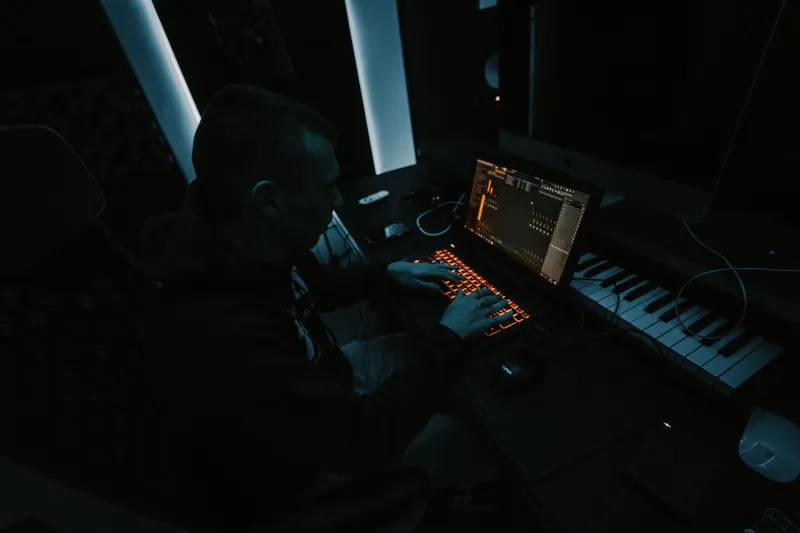
Let's be honest about the odds. The electronic music landscape in the US right now is brutally crowded. SoundCloud has millions of tracks. Every major city has a dozen producers who are genuinely talented and going nowhere. Streaming algorithms favor established names. Getting a booking agent to return your emails feels like trying to get into Harvard.
So how does anyone actually break through?
For a lot of aspiring producers, the answer might be hiding in plain sight — in the career trajectory of a duo that went from releasing free EPs online to headlining Coachella and Ultra within a few years. Knife Party's path from the dubstep underground to mainstream festival culture wasn't luck. It was a series of smart, sometimes unconventional decisions that, when you lay them out, start to look a lot like a blueprint.
Let's break it down.
Start With a Credibility Foundation, Not a Shortcut
Before Knife Party existed, Rob Swire and Gareth McGrillen spent years building Pendulum into one of the most technically respected drum and bass acts in the world. They weren't rookies who stumbled into electronic music. They were seasoned professionals with deep production chops, a touring infrastructure, and a fanbase that trusted their judgment.
For producers starting from zero, the lesson here isn't discouraging — it's clarifying. Credibility compounds. The years you spend developing actual technical skills, understanding music theory, learning your DAW inside and out, playing smaller gigs — none of that is wasted time. It's the foundation that makes everything that comes later sustainable.
Too many producers skip this phase, chasing viral moments before they've developed the craft to back them up. When the moment comes and people actually pay attention, they find nothing there to hold onto. Knife Party had the receipts before they ever needed to show them.
Timing Your Entry Into a Scene
Knife Party launched in 2011, right at the inflection point when dubstep was transitioning from a UK underground phenomenon into an American mainstream explosion. Skrillex had just detonated into public consciousness. Bass music was everywhere. But the field wasn't yet saturated with polished major-label acts trying to cash in.
They entered at precisely the right moment — early enough to be authentic participants in the scene's growth, late enough that there was an actual audience ready to receive them.
This is harder to replicate mechanically than it sounds, but the principle is transferable: don't try to enter a scene at its peak, when every major player is already established. Find the thing that's building momentum and get in while there's still space to own a position.
For US producers right now, this means paying close attention to what's emerging at the underground level — in regional scenes, on niche streaming channels, in the communities forming around subgenres that don't have mainstream coverage yet. That's where the next wave starts.
The Free Release Strategy and Why It Still Works
Knife Party's early EPs — "Rage Valley," "Haunted," "Abandoned" — were released for free. In an era when digital piracy was gutting music revenue, they essentially embraced the logic of it: give the music away, build the audience, monetize through live performance and licensing.
This wasn't resignation. It was strategy. Free releases spread faster, get played more, build goodwill with fans, and create the kind of organic word-of-mouth that no marketing budget can fully replicate. "Internet Friends" became a phenomenon in part because there was zero friction between people discovering it and sharing it.
For bedroom producers in the US today, the equivalent move is being genuinely generous with your music. Don't gate everything behind a SoundCloud paywall or hold back your best work for a release campaign that may never come together. Put real music into the world, let it move freely, and focus on building the relationship with listeners rather than optimizing short-term revenue from a tiny audience.
The money follows the audience. Build the audience first.
Brand Identity That's Earned, Not Manufactured
Here's something worth sitting with: Knife Party's aesthetic — the blade imagery, the aggressive visual identity, the "Drop the Bass. Feel the Blade" energy — feels authentic because it actually reflects the music. The brand matches the product.
This sounds obvious, but it's surprisingly rare. A lot of producers spend enormous energy developing a visual identity, a social media persona, a "brand" — before they've figured out what their music actually sounds like. The result is a polished exterior with nothing coherent inside.
Knife Party built their identity from the inside out. The name, the imagery, the aesthetic — all of it emerged organically from the kind of music they were making. Sharp, aggressive, precise, viscerally satisfying. The blade is a metaphor for the music itself.
Aspiring producers should think carefully about this. Your brand should be a description of your music, not a costume you put on over it. Figure out what you actually sound like — what your artistic identity genuinely is — and then let the visual and cultural elements grow from that root.
Live Production as Differentiation
As Knife Party scaled up, they invested heavily in live production — visuals, lighting design, stage presence, the full theatrical experience of a festival set. This wasn't vanity. It was a recognition that in a world where anyone can stream your music for free, the live experience is the product that can't be replicated.
For US producers grinding toward their first bookings, this principle applies even at the smallest scale. How you present yourself at a 300-person club show matters. The visual elements you bring, even minimal ones. The energy you project. The way you sequence a set to create a narrative arc rather than just playing tracks back to back.
Bookers talk to each other. Promoters share notes. A producer who delivers a genuinely memorable live experience at a small venue gets talked about. That word of mouth is more valuable than almost any marketing.
Strategic Collaborations Over Chasing Cosigns
Knife Party's collaborative history is telling. They've worked with artists who made sense sonically and creatively, not just whoever was most famous at the moment. The result is a discography where the features feel organic rather than calculated.
For emerging producers, the temptation to chase a big-name feature for the clout is real and understandable. But collaborations that exist purely for optics tend to produce music that sounds like it exists purely for optics — and audiences can feel that inauthenticity.
Focus on collaborating with artists you actually respect, whose work genuinely intersects with yours. The best creative partnerships produce music that neither party could have made alone, and that kind of synergy is obvious to listeners.
The Long Game Is the Only Game
Maybe the most important thing Knife Party's career demonstrates is that sustainable success in electronic music is built over years, not months. There were no overnight moments. Every milestone — the early EPs, the first festival slots, the mainstream crossover, the Interscope deal — was the result of accumulated work and compounding reputation.
The US music market right now rewards patience poorly. Algorithms push recency, social media rewards volume, and the cultural conversation moves at a pace that makes anything older than six months feel ancient. It's easy to get discouraged when you're not seeing immediate results.
But the producers who are still here in ten years are the ones who treated this as a craft to develop over a lifetime rather than a lottery ticket to scratch. Rob and Gareth built Pendulum for years before Knife Party existed. They were already veterans when they seemed like newcomers.
The blade gets sharper the longer you work it.
There's no shortcut to that. But there is a path.